
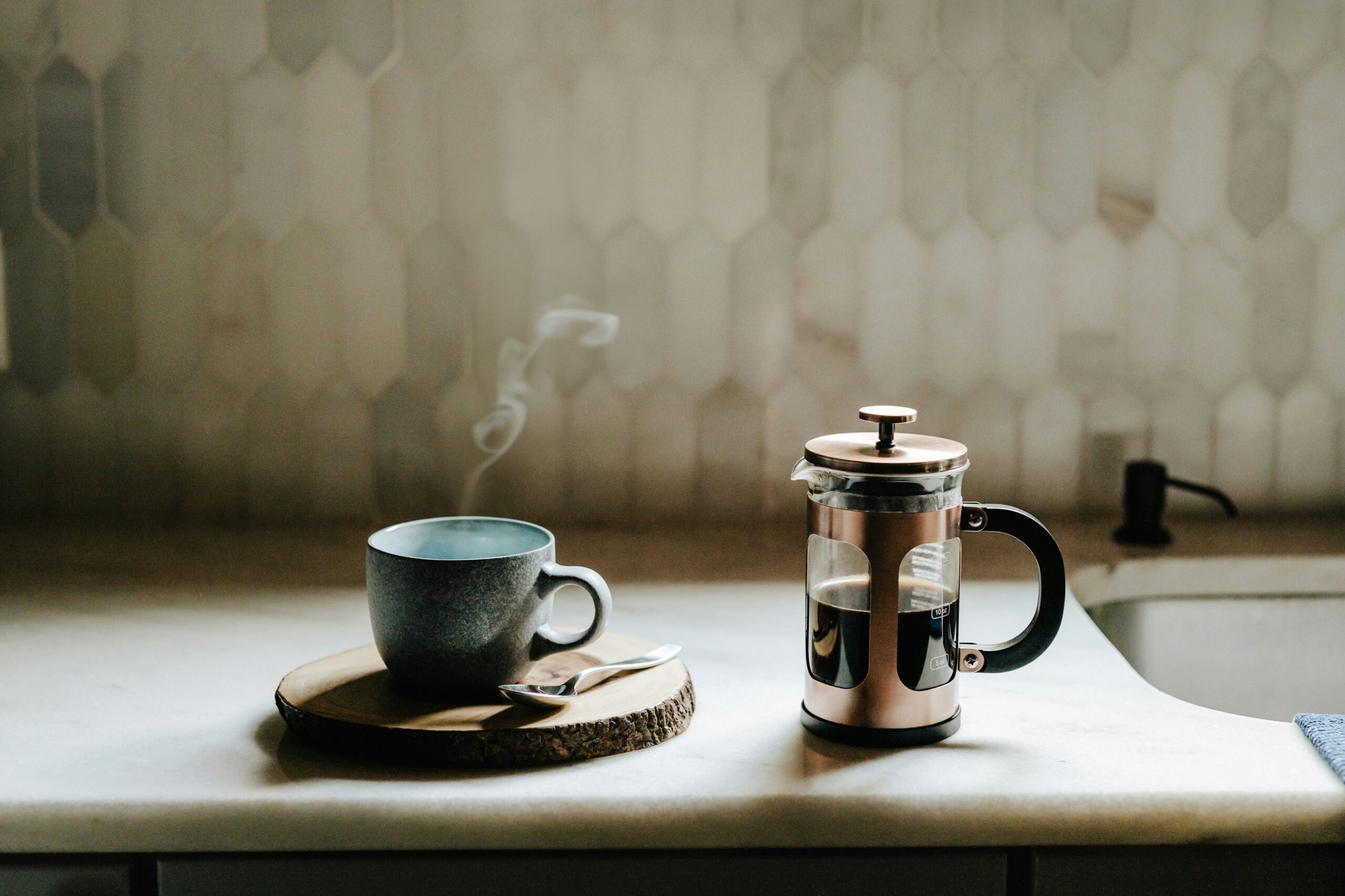
Few brewing methods capture the essence of coffee quite like the French press. Simple in design yet rich in results, this classic coffee press has remained a favourite among coffee lovers for decades. Known for producing bold, aromatic cups with a full mouthfeel, the French press invites you to slow down and engage with the brewing process.
Whether you’re new to this method or refining your technique, understanding how the French press works can elevate every cup you brew.
What Is a French Press?
A French press is a manual coffee brewer made up of a cylindrical carafe, a metal mesh filter, and a plunger. Unlike paper-filtered methods, the French press allows coffee grounds to steep directly in hot water, extracting oils and flavours that other methods often filter out.
This immersion brewing style produces a coffee that feels richer, heavier, and more expressive — making it ideal for those who enjoy depth and intensity.
Why French Press Coffee Tastes Different
The defining feature of French press brewing is its metal filter. Unlike paper filters, it doesn’t trap natural oils, allowing them to remain in the final cup. This results in:
- A fuller body
- Enhanced aroma
- Deeper flavour complexity
Because of this, many consider French press coffee to be among the most satisfying ways to experience high-quality beans.
Choosing the Best French Press Coffee
Finding the best French press coffee starts with selecting the right beans and grind size. French press brewing works best with medium to dark roasts, which highlight chocolate, nutty, and caramel notes.
When choosing coffee for French press, look for:
- Freshly roasted beans
- Balanced flavour profiles
- Low acidity if you prefer smoothness
Single-origin coffees can shine in a French press, but well-crafted blends also perform beautifully.
Grind Size Matters More Than You Think
A coarse grind is essential for French press brewing. The coffee grounds should resemble sea salt or raw sugar. Using too fine a grind can cause over-extraction and allow sediment to pass through the filter.
Consistent grind size ensures:
- Clean extraction
- Reduced bitterness
- Better filtration
A burr grinder is strongly recommended for achieving this consistency.
How to Brew French Press Coffee Properly
Basic steps for brewing:
- Heat water to just below boiling
- Add coarse coffee grounds to the press
- Pour water evenly over the grounds
- Stir gently and cover
- Steep for 4 minutes
- Press slowly and serve immediately
This simple process allows for minor adjustments, making it easy to tailor the strength and flavour to your taste.
Cold French Press: A Smooth Alternative
The cold French press method adapts this classic brewer for cold brew coffee. Instead of hot water, coarse grounds are steeped in cold water for 12–18 hours.
Benefits of cold French press brewing include:
- Lower acidity
- Smooth, mellow flavour
- Natural sweetness
It’s an excellent option for warmer months or for those sensitive to acidity.
French Press vs Other Coffee Methods
Compared to drip or pour over methods, the French press delivers a bolder, heavier cup. It emphasises texture and depth rather than clarity.
- Versus drip coffee: richer and more robust
- Versus espresso: less intense but more aromatic
- Versus pour over: fuller body, less brightness
Each method has its place, but the French press stands out for its immersive experience.
Cleaning and Maintaining Your Coffee Press
Proper care extends the life of your coffee press and preserves flavour quality. After each use:
- Discard used grounds
- Rinse thoroughly
- Clean the mesh filter regularly
Occasional deep cleaning prevents oil buildup, which can cause stale flavours over time.
Common French Press Mistakes to Avoid
Even simple methods have pitfalls. Common mistakes include:
- Using fine coffee grounds
- Over-steeping
- Pressing too quickly
- Leaving coffee in the press after brewing
Pouring the coffee immediately after pressing helps prevent bitterness.
Why the French Press Remains Popular
In a world of increasingly complex coffee technology, the French press remains refreshingly straightforward. It requires no electricity, no filters, and minimal equipment — just time, quality coffee, and attention.
Its enduring appeal lies in its honesty: what you put in is what you get out.
Final Thoughts
The French press proves that great coffee doesn’t need to be complicated. With the right coffee for French press, a consistent grind, and thoughtful brewing, it delivers some of the most satisfying cups you can make at home.
Whether enjoyed hot or as a cold French press brew, this timeless method continues to earn its place in modern coffee culture.
Join us for the next article, where we’ll explore another coffee maker: The drip coffee maker.